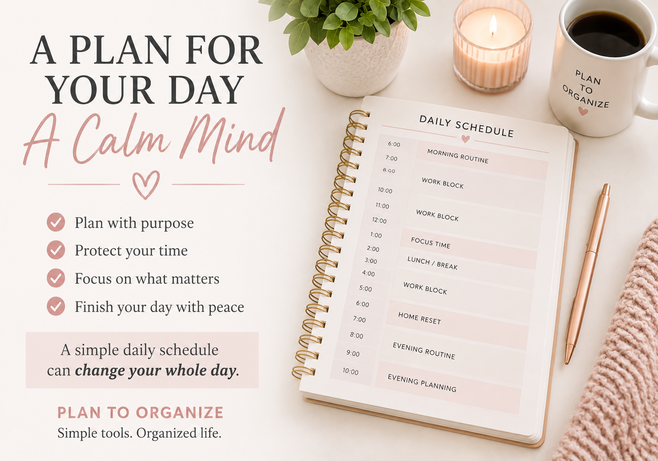
Being organized does not mean your life is perfect.
It does not mean your house is always spotless, your inbox is always empty, or your schedule always goes exactly as planned. Real life is busy. Things come up. Plans change. Some days feel smooth, and other days feel like everything is happening at once.
But an organized woman knows one important thing: a good daily schedule can make life feel a little lighter.
A daily schedule gives your day structure. It helps you know what needs your attention, what can wait, and where your time is actually going. Instead of waking up and immediately feeling behind, you start the day with a plan.
The goal is not to pack every minute with tasks. The goal is to create a routine that helps you feel calm, prepared, and in control.
Whether you are managing a home, building a business, working a full-time job, caring for family, or simply trying to create more peace in your day, this organized woman’s daily schedule can help you build a routine that works for real life.
I like using a simple daily planner to map out my top priorities before the day gets busy.

Why Every Organized Woman Needs a Daily Schedule
A daily schedule is more than a list of tasks.
It is a guide for your time, energy, and priorities.
Without a schedule, it is easy to spend the day reacting to everything around you. You respond to messages, handle last-minute needs, clean random areas of the house, jump from one task to another, and still end the day wondering what you actually accomplished.
A schedule helps you become more intentional.
It allows you to decide ahead of time what matters most. It also helps reduce decision fatigue because you are not constantly asking yourself, “What should I do next?”
An organized schedule can help you:
- Start your day with less stress
- Stay focused on your priorities
- Make time for yourself
- Keep up with household tasks
- Manage work and personal responsibilities
- Reduce mental clutter
- Create a smoother evening routine
- Feel more prepared for tomorrow
The best schedule is not the busiest one. The best schedule is the one that supports the woman you are and the life you are actually living.
1. Start with a Calm Morning Routine
The way you start your morning can shape the rest of your day.
An organized woman does not need a complicated morning routine. She needs a realistic one. Something simple enough to follow even when life feels busy.
A calm morning routine might include:
- Waking up before the rush
- Drinking water
- Making the bed
- Getting dressed
- Reviewing the day’s schedule
- Writing down the top three priorities
- Starting one small household task
- Taking a few quiet minutes before the day begins
This does not have to take hours. Even 20 to 30 minutes of intentional time can make a difference.
The goal is to avoid starting the day in panic mode. When you give yourself a few minutes to get centered, you are less likely to feel scattered.
A simple morning schedule could look like this:
6:30 AM — Wake up and drink water
Start your day by giving your body what it needs before reaching for your phone.
6:40 AM — Make the bed and tidy the bedroom
This small task creates an instant feeling of order.
6:50 AM — Get ready for the day
Put on something that makes you feel comfortable, confident, and prepared.
7:15 AM — Review your planner or schedule
Look over appointments, tasks, errands, meals, and reminders.
7:25 AM — Choose your top three priorities
Ask yourself, “What are the three most important things I need to complete today?”
One thing that makes mornings easier is having a printable planner you can quickly check before the day gets busy.
2. Do a Quick Home Reset
A home reset does not mean deep cleaning your entire house.
It means taking a few minutes to bring your space back to a manageable level. Small resets throughout the day can prevent messes from becoming overwhelming.
An organized woman understands that a little maintenance is easier than a huge cleanup later.
A quick morning home reset might include:
- Starting a load of laundry
- Unloading the dishwasher
- Wiping the kitchen counters
- Taking out trash
- Picking up items that are out of place
- Preparing bags, lunches, or work items
This can be done in 10 to 15 minutes.
The key is to focus on visible areas that affect your mood the most. For many women, that is the kitchen, bedroom, bathroom, or main living space.
When your surroundings feel calmer, your mind often feels calmer too.
3. Plan Your Work Block or Focus Time
Once the morning basics are handled, it is time to move into your main work or focus block.
This may look different depending on your life. You may be going to work, working from home, caring for children, running errands, managing a business, or handling household responsibilities.
The important thing is to know what your focus is for that part of the day.
Instead of trying to do everything at once, choose one main category of focus.
For example:
Work focus: meetings, emails, projects, client work, deadlines
Home focus: cleaning, organizing, laundry, meal prep, errands
Business focus: content creation, product updates, marketing, admin tasks
Personal focus: appointments, health, finances, planning, self-care
A focused schedule could look like this:
8:30 AM — Begin work or main task block
Start with your highest-priority task before checking too many messages.
10:30 AM — Take a short break
Step away, stretch, refill your water, or reset your space.
10:45 AM — Continue focused work
Return to your next most important task.
12:00 PM — Lunch and midday reset
An organized woman protects her focus. She knows that every notification, distraction, and unnecessary task can pull her away from what matters.
That does not mean she ignores everything. It means she creates boundaries around her attention.
A simple desk organizer is one of my favorite productivity tools because it keeps your workspace clear and helps you stay focused during busy work blocks.
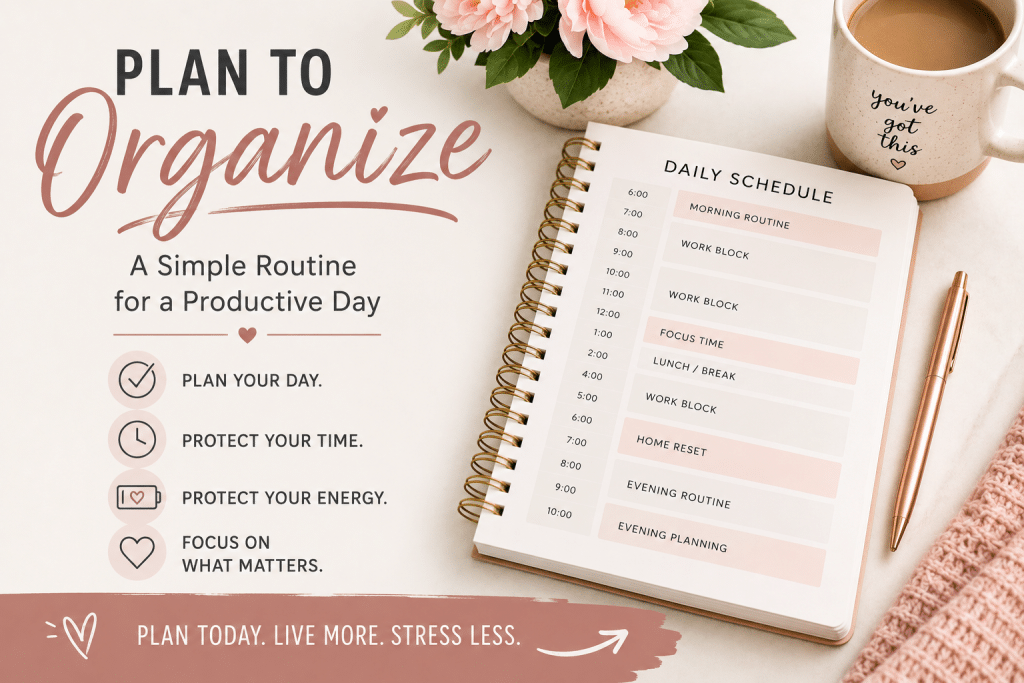
4. Use a Midday Reset to Get Back on Track
Even the best-planned day can get messy by lunchtime.
That is why a midday reset is so helpful.
A midday reset gives you a chance to pause, check in, and adjust. It keeps one unexpected moment from throwing off your entire day.
During your midday reset, ask yourself:
- What have I completed so far?
- What still needs to be done?
- What can wait until tomorrow?
- Do I need to adjust my schedule?
- Have I eaten, had water, or taken a real break?
This is also a good time to tidy up your workspace, check your calendar, and respond to important messages.
A simple midday reset could look like this:
12:00 PM — Eat lunch away from your desk if possible
Give yourself a real pause instead of rushing through food while multitasking.
12:30 PM — Review your task list
Cross off what is done and adjust what remains.
12:40 PM — Do a quick tidy
Clear dishes, reset your desk, or put away clutter.
12:45 PM — Choose your afternoon priority
Pick one thing that would make the rest of the day feel successful.
This small habit can make your day feel much more manageable.
5. Create an Afternoon Productivity Block
Afternoons can be tricky.
Energy may dip, motivation may fade, and distractions can pile up. This is why it helps to keep your afternoon schedule realistic.
Instead of expecting yourself to operate at full speed all day, plan your afternoon around the type of energy you usually have.
If you are more focused in the morning, use the afternoon for lighter tasks like email, errands, admin work, or simple home chores.
If you get a second burst of energy later in the day, use that time for creative work, organizing projects, or important tasks that need attention.
An afternoon schedule might look like this:
1:00 PM — Return to work, errands, or home tasks
Focus on the next realistic priority.
2:30 PM — Check messages or email
Try to batch communication instead of checking constantly.
3:00 PM — Complete one small organizing task
This could be clearing a drawer, folding laundry, filing papers, or planning dinner.
4:00 PM — Prepare for the evening transition
Wrap up work, check appointments, review dinner plans, and prepare for the next part of the day.
The goal is not to finish everything. The goal is to move through the day with intention.
6. Build an Evening Routine That Makes Life Easier
Evening routines are powerful because they help tomorrow feel less stressful.
A calm evening does not always happen naturally. It often needs a little structure.
An organized woman uses her evening routine to reset her home, care for herself, and prepare for the next day.
This might include:
- Making dinner
- Cleaning the kitchen
- Preparing lunches
- Choosing tomorrow’s outfit
- Reviewing tomorrow’s schedule
- Packing bags
- Setting out important items
- Doing a 10-minute tidy
- Starting the dishwasher
- Taking time to relax
A simple evening schedule could look like this:
5:30 PM — Dinner prep or family dinner
Keep meals simple on busy nights. A peaceful dinner matters more than a perfect one.
6:30 PM — Kitchen reset
Clear counters, load the dishwasher, wipe surfaces, and take care of leftovers.
7:00 PM — Family, personal, or quiet time
Use this time for connection, hobbies, reading, a walk, or rest.
8:00 PM — Prepare for tomorrow
Check your calendar, set out clothing, pack bags, and write down reminders.
8:30 PM — 10-minute home tidy
Focus on the main areas you want to wake up to clean.
A simple kitchen organizer can make your evening routine easier by keeping your counters clearer, your essentials in one place, and your kitchen reset less stressful.
7. End the Day with a Nightly Reset
A nightly reset is one of the best habits for staying organized.
It helps you close the day instead of carrying everything into tomorrow.
This does not need to be long or complicated. In fact, the simpler it is, the more likely you are to stick with it.
A nightly reset may include:
- Reviewing what you completed
- Moving unfinished tasks to tomorrow
- Writing a short to-do list
- Checking appointments
- Charging your phone
- Setting your alarm
- Clearing your nightstand
- Doing skincare or a calming routine
- Reading or journaling before bed
A good question to ask every night is:
“What can I do tonight that my future self will thank me for tomorrow?”
Sometimes the most helpful thing you can do is load the dishwasher, move the clothes to the dryer, write down a reminder, or simply give yourself permission to go to bed on time.
Being organized also means knowing when to rest.
Sample Daily Schedule for the Organized Woman
Here is a simple example of what an organized woman’s daily schedule could look like:
6:30 AM — Wake up, drink water, and make the bed
Start the day with a small win.
6:45 AM — Get dressed and ready
Prepare yourself for the day ahead.
7:15 AM — Review planner and choose top three priorities
Decide what matters most today.
7:30 AM — Quick kitchen or home reset
Unload the dishwasher, wipe counters, or start laundry.
8:00 AM — Begin work, errands, or main focus block
Start with your most important task.
10:30 AM — Short break
Stretch, refill water, and reset your mind.
12:00 PM — Lunch and midday check-in
Eat, review your list, and adjust your afternoon plan.
1:00 PM — Afternoon productivity block
Handle work, errands, admin tasks, or household responsibilities.
3:00 PM — Communication check
Respond to emails, messages, or calls in a focused batch.
4:30 PM — Transition into evening
Wrap up work, check dinner plans, and prepare for the next part of the day.
5:30 PM — Dinner and kitchen reset
Keep it simple and clean as you go.
7:00 PM — Personal, family, or quiet time
Make space for connection and rest.
8:00 PM — Prepare for tomorrow
Check your calendar, pack bags, choose clothes, and write tomorrow’s list.
8:30 PM — 10-minute tidy
Reset the main living areas.
9:00 PM — Wind down
Put away your phone, journal, read, stretch, or do your skincare routine.
10:00 PM — Bedtime
Rest is part of being productive.
A productivity planner printable can help you organize your daily schedule, top priorities, home tasks, and evening reset all in one simple place.
Tips for Creating a Daily Schedule That Actually Works
The most organized schedule is the one you can actually follow.
Here are a few tips to make your daily routine realistic:
Keep it simple.
Do not try to schedule every minute of your day. Leave space for real life.
Use time blocks.
Group similar tasks together, such as errands, emails, cleaning, or focused work.
Choose three main priorities.
A long to-do list can feel overwhelming. Three important tasks feel more doable.
Plan around your energy.
Do harder tasks when you usually feel your best.
Reset throughout the day.
Small resets prevent big messes.
Prepare the night before.
Tomorrow becomes easier when you take a few minutes to prepare tonight.
Give yourself grace.
An organized woman is not perfect. She is intentional.
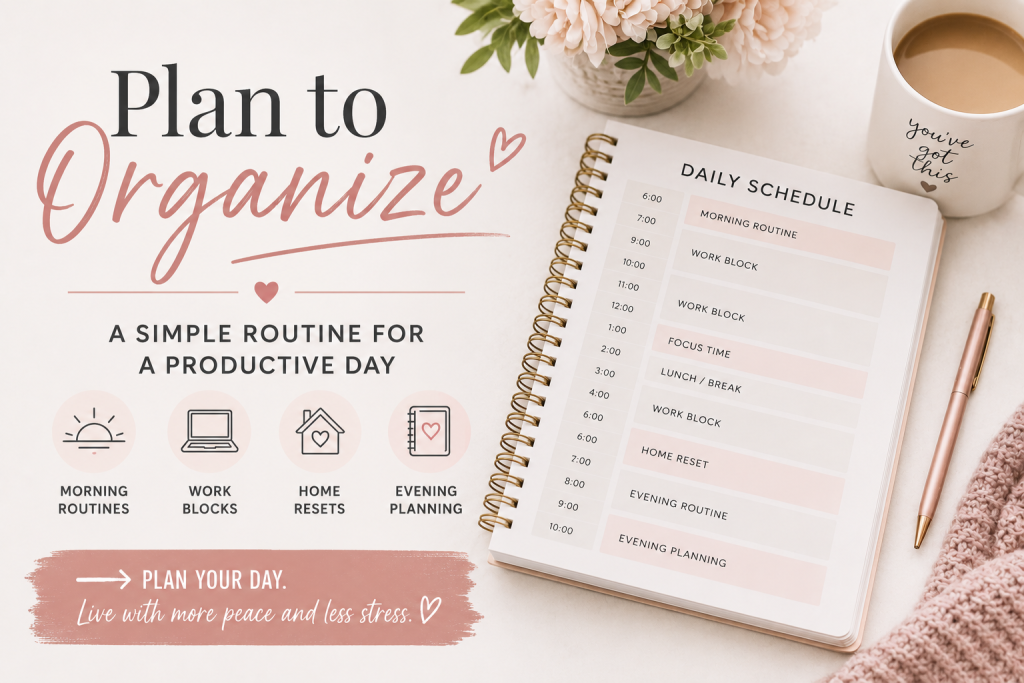
The Organized Woman’s Daily Schedule Is About Peace, Not Perfection
A daily schedule is not meant to control every moment of your life.
A daily schedule is meant to support you, not pressure you. It gives your day direction, helps you protect your time and energy, and keeps small tasks from turning into overwhelming ones.
Most importantly, it helps you create a life that feels calmer and more intentional.
You do not need a perfect routine to be an organized woman. You just need a simple schedule that helps you show up for your day with more confidence, clarity, and peace.
Start small. Choose one routine to improve. Maybe it is your morning, your evening, or your weekly planning. Then build from there.
Organization is not about doing everything.
It is about making room for what matters most.
Ready to create a calmer, more organized week? Get the weekly planner printable to plan your priorities, schedule your routines, track important tasks, and feel more prepared for the days ahead.





Leave a Reply