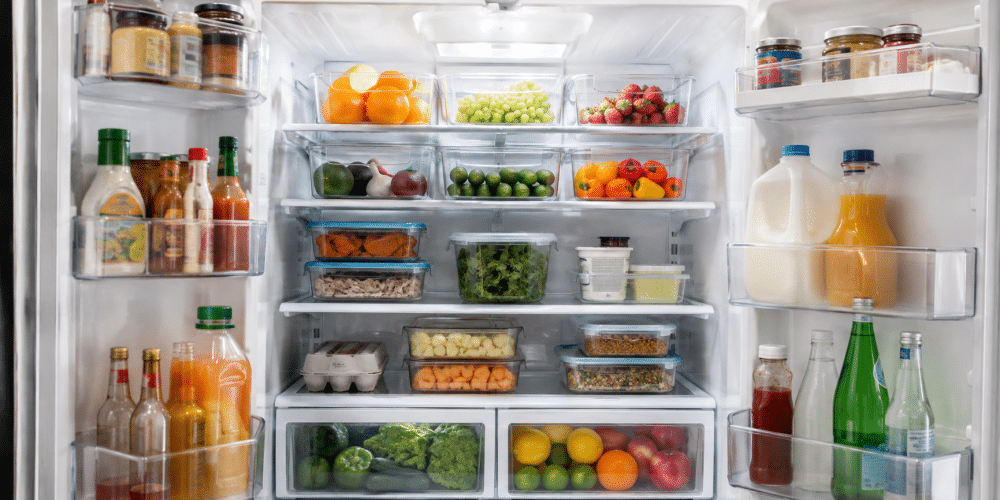
A cluttered refrigerator makes it harder to see what you have, find ingredients and use food before it goes bad. The good news? Learning how to organize your fridge doesn’t require an elaborate makeover or dozens of refrigerator organizers.
With a simple system, you can create an organized refrigerator that makes groceries easier to find, meal prep faster and weekly cleanups much easier.
In this guide, you’ll learn how to organize a refrigerator in five simple steps, including the best fridge storage zones, which organizers are actually useful and one easy trick that can help reduce forgotten food.
How to Organize Your Fridge at a Glance
If you want to organize your fridge quickly, start with these five steps:
- Empty, declutter and clean the refrigerator.
- Create designated fridge storage zones.
- Use clear containers and simple organizers.
- Follow the First In, First Out method and create an “Eat First” area.
- Do a quick refrigerator reset each week.
Once you have these basic systems in place, keeping your refrigerator organized becomes much easier.
Tip: Before organizing, make sure your refrigerator is maintaining a temperature of 40°F or below. This helps keep refrigerated foods stored safely.
Why Organize Your Fridge?
A beautifully organized fridge is nice to look at, but the real benefits are practical.
You Can See What You Have
When food is visible, you’re less likely to forget about leftovers, produce or groceries hiding behind other items.
This can also help prevent buying duplicates because you can quickly see what’s already in the refrigerator before making your grocery list.
You May Waste Less Food
One of the most useful fridge organization strategies is simply keeping foods that need to be eaten soon where you can see them.
Instead of discovering an old container of strawberries or forgotten leftovers at the back of the refrigerator, an organized system keeps those foods front and center.
Meal Prep Becomes Easier
Keeping similar foods together means you spend less time searching.
For example, you might create areas for:
- Breakfast foods
- Lunch ingredients
- Snacks
- Produce
- Dairy
- Leftovers
- Condiments
- Foods to use soon
The goal isn’t to create a picture-perfect refrigerator. It’s to create a fridge organization system that works for your household.
Cleaning Becomes Faster
Bins and defined categories make it easier to remove several items at once when wiping down a shelf.
And when every category has a home, putting groceries away becomes faster too.
Step 1: Empty, Declutter and Clean Your Fridge
The easiest way to organize a refrigerator is to begin with a clean slate.
Remove the food from one section—or the entire refrigerator if you have time—and place refrigerated items somewhere cool while you work.
Check Everything Before Putting It Back
Look through:
- Leftovers
- Produce
- Dairy products
- Condiments
- Sauces
- Deli items
- Beverages
- Jars
- Containers
Discard spoiled food and anything that is no longer safe or useful.
This is also a good time to combine duplicate items when appropriate and wipe sticky jars or bottles before they go back into the refrigerator.
Clean the Shelves and Drawers
Remove shelves and drawers according to your refrigerator manufacturer’s instructions.
Wipe down:
- Shelves
- Drawers
- Interior walls
- Door shelves
- Handles
- Seals
- Containers
Pay special attention to small spills that can become sticky over time.
Once everything is dry, you’re ready to start creating your refrigerator organization system.
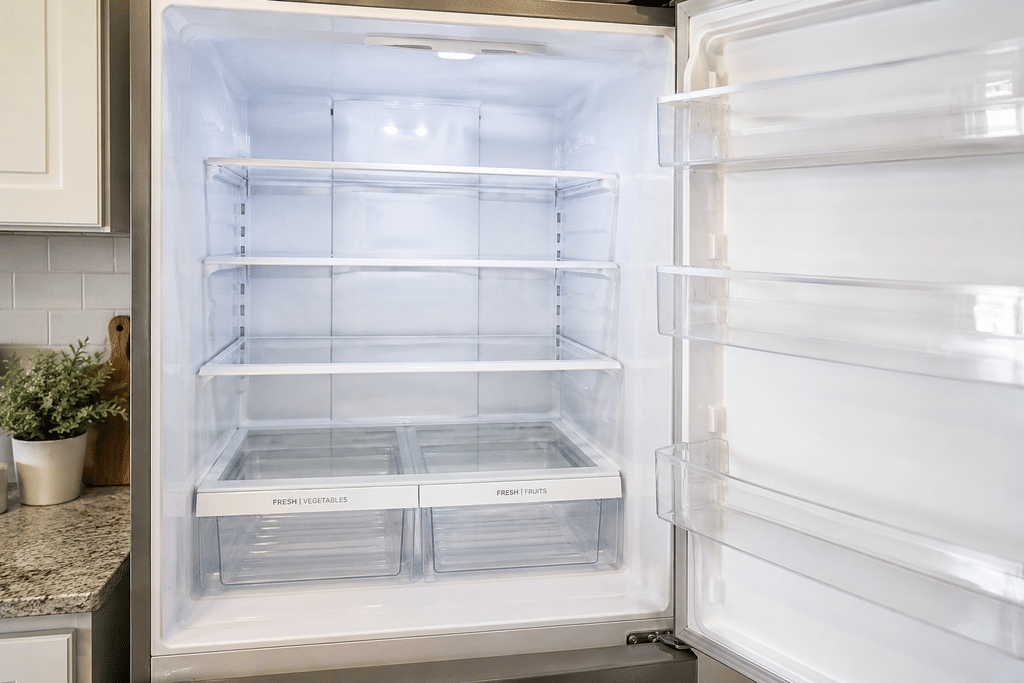
Step 2: Organize Your Fridge Into Storage Zones
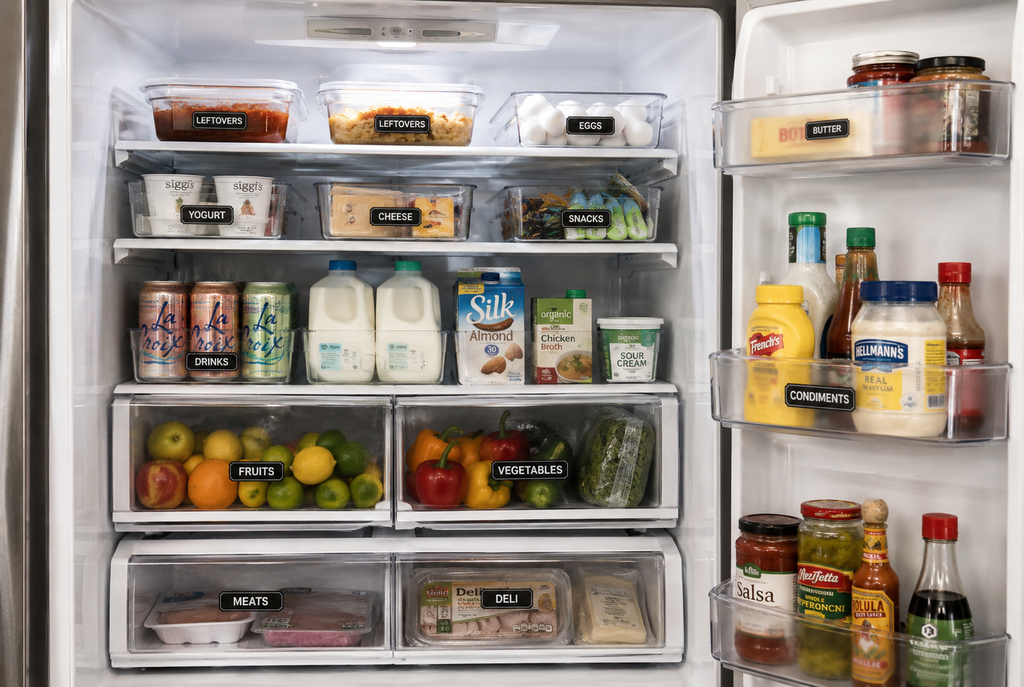
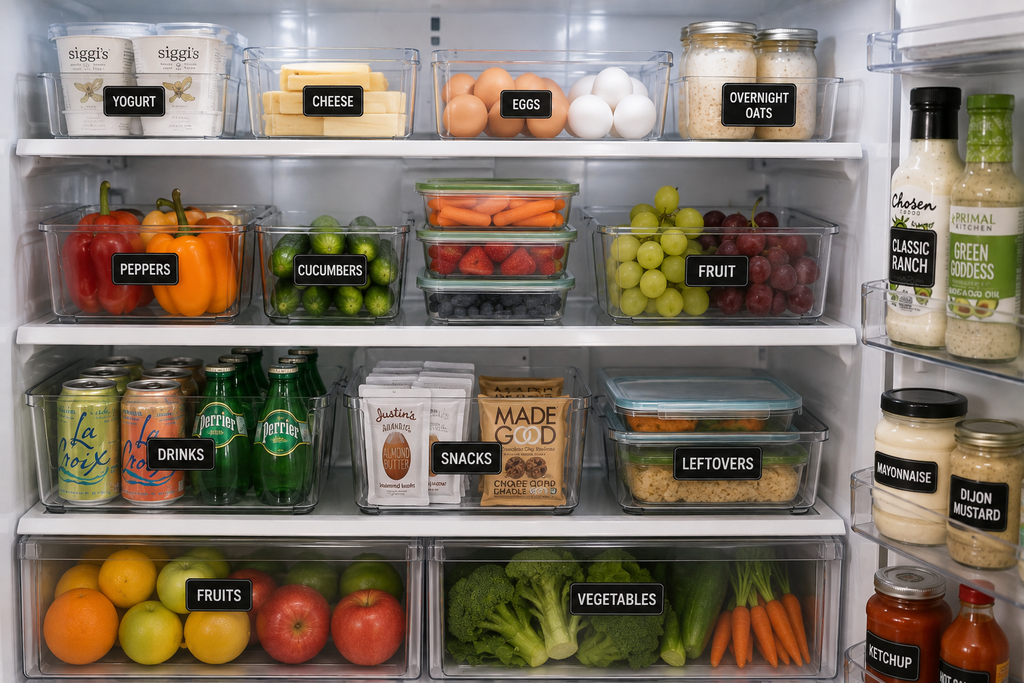
Instead of putting groceries wherever they fit, give different categories a consistent home.
This is one of the most important fridge organization ideas because it makes it easy for everyone in your household to know where food belongs.
One important food-safety note: refrigerator designs vary, so don’t assume every model has exactly the same warm and cold areas. Your refrigerator should remain at 40°F or below throughout the cabinet.
Upper and Middle Shelves
Use the main shelves for foods you want to see easily and items that need consistent refrigeration, such as:
- Leftovers
- Ready-to-eat foods
- Yogurt
- Milk
- Cheese
- Meal-prep containers
- Eggs
Keep eggs in their original carton on an interior refrigerator shelf rather than in the refrigerator door.
Lower Shelf
Raw meat, poultry and seafood should be stored securely in containers or packaging that prevents juices from dripping onto other foods.
A lower shelf is often a convenient location because it reduces the chance that an accidental leak will contaminate food underneath it.
Consider placing packaged raw meat inside a washable tray or designated bin for additional protection.
Crisper Drawers
Use your refrigerator’s crisper drawers for produce.
If your refrigerator has adjustable humidity controls, a helpful general system is:
Higher humidity:
Leafy greens and many vegetables
Lower humidity:
Many fruits and produce that release ethylene gas
Always follow the recommendations for your specific refrigerator and the type of produce you’re storing.
Refrigerator Door
Because the temperature in the refrigerator door fluctuates more when the door opens, reserve this area for items that tolerate those fluctuations better.
Good options often include:
- Condiments
- Mustard
- Ketchup
- Pickles
- Sauces
- Salad dressings
Avoid storing eggs in the refrigerator door.
Create a Snack Zone
If your family frequently reaches for snacks, dedicate one easy-to-access area to grab-and-go options.
Depending on your household, that might include:
- Yogurt
- Cheese
- Washed fruit
- Vegetables
- Hummus
- Individual snacks
Keeping frequently used foods together can prevent the rest of the refrigerator from being rearranged every time someone wants a snack.
Step 3: Use Fridge Organizers Strategically
You don’t need to fill every shelf with refrigerator organizers.
In fact, too many containers can make your fridge harder to maintain.
Instead, choose a few storage solutions that solve specific problems.
Clear Refrigerator Bins
Clear bins work especially well for grouping smaller items.
Try categories such as:
- Snacks
- Yogurt
- Cheese
- Breakfast
- Lunch
- Sandwich ingredients
- Sauces
Clear bins make it possible to see the contents without pulling everything out.
Clear Food Storage Containers
Clear containers are especially helpful for leftovers because you can immediately see what’s inside.
Stackable containers can also make better use of vertical refrigerator space.
Lazy Susans
A small turntable can be useful for jars and condiments that otherwise get pushed toward the back of a deep shelf.
Instead of moving several bottles, simply rotate the organizer.
Labels
Labels are helpful when they make your refrigerator easier for everyone to maintain.
Simple labels such as:
SNACKS
CHEESE
LUNCH
LEFTOVERS
EAT FIRST
are usually more useful than creating a separate label for every individual food.
Don’t Overfill the Refrigerator
Leave enough room for cold air to circulate.
An organized fridge should make food more visible—not squeeze as much food as possible onto every shelf.
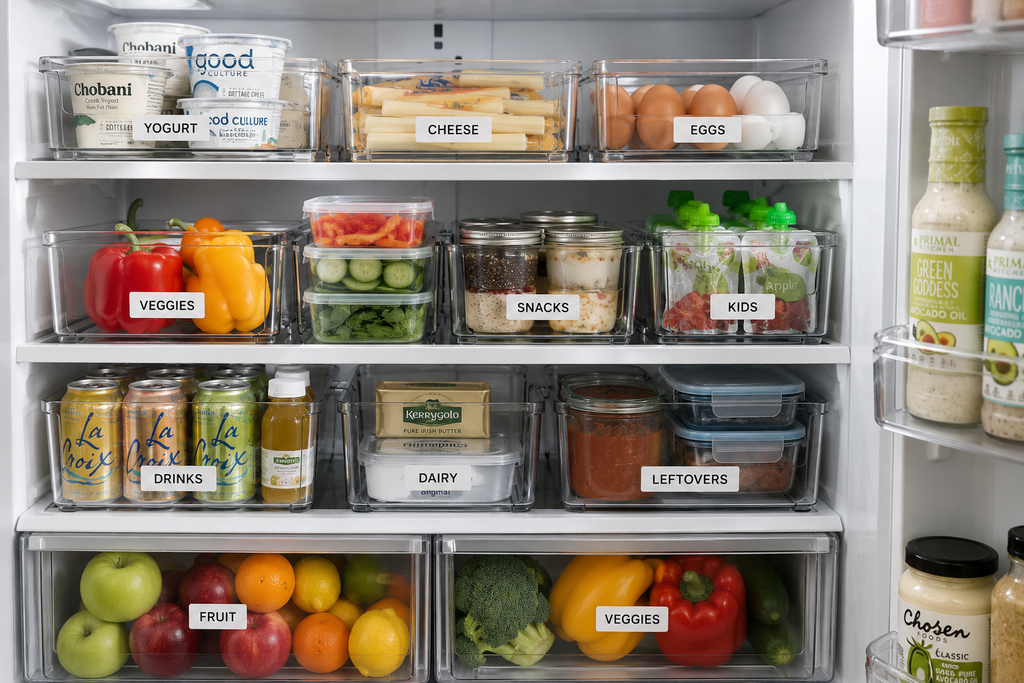
Step 4: Use FIFO and Create an “Eat First” Bin
One of the easiest ways to reduce forgotten food is to follow the FIFO method: First In, First Out.
When you buy a new container of an item you already have, place the newer one behind the older one.
For example:
Instead of putting a new yogurt in front of the older yogurts, move the older containers forward and place the new ones behind them.
The same idea works for:
- Milk
- Yogurt
- Drinks
- Cheese
- Packaged foods
- Condiments
- Produce
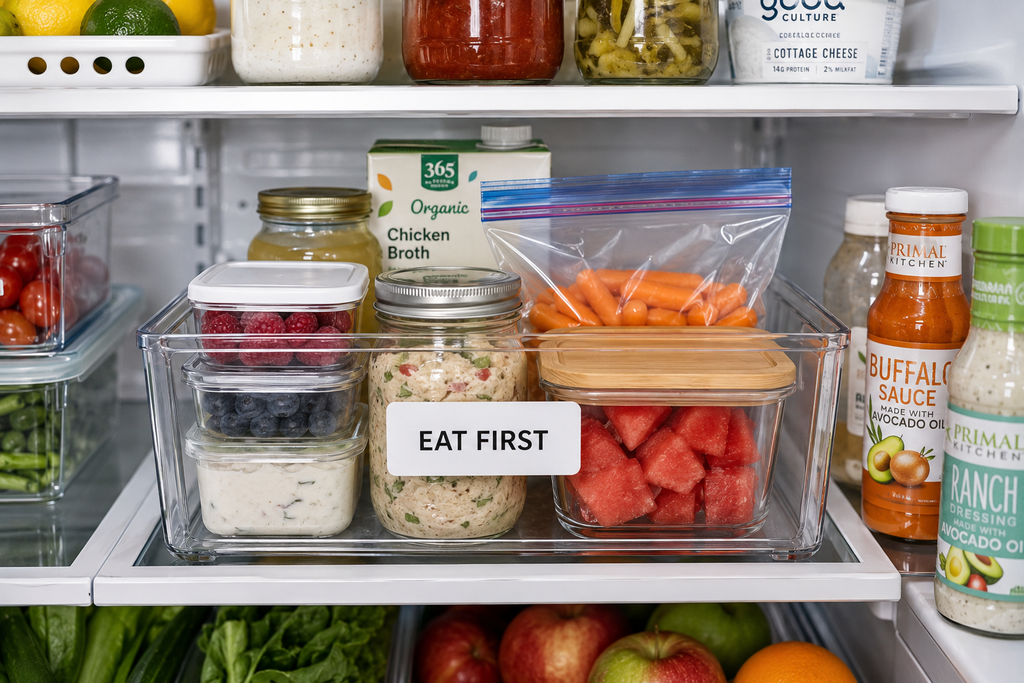
Create an “Eat First” Section
This may be the single most useful addition to your fridge organization system.
Designate a small bin, shelf or visible section as:
EAT FIRST
Place foods here that should be used soon, such as:
- Leftovers
- Open packages
- Ripe produce
- Cut fruit
- Half-used ingredients
- Foods nearing their use-by date
Then check this section before deciding what to make for lunch, dinner or a snack.
An “Eat First” zone creates a visual reminder to use food rather than letting it disappear at the back of the refrigerator.
Step 5: Do a Weekly Fridge Reset
The secret to keeping an organized fridge isn’t organizing it perfectly once.
It’s having a simple maintenance routine.
Choose one day each week for a 5- to 10-minute fridge reset.
The easiest time is often right before you make your grocery list or go grocery shopping.
Weekly Fridge Reset
During your reset:
- Check leftovers.
- Remove spoiled food.
- Look for produce that needs to be used.
- Move older foods toward the front.
- Add foods that need to be eaten soon to your Eat First section.
- Wipe up spills.
- Return misplaced items to their zones.
- Check what you already have before making your grocery list.
This simple habit prevents your refrigerator from becoming completely disorganized again.
Simple Fridge Organization Ideas That Make a Big Difference
Once your basic system is established, these additional refrigerator organization tips can make it even easier to maintain.
Keep Frequently Used Foods at Eye Level
Put foods your family uses most where they’re easiest to see and reach.
Reserve less convenient locations for items you use less frequently.
Store Similar Foods Together
Instead of spreading yogurt, cheese and other similar foods across several shelves, group them together.
This creates a visual inventory and makes grocery planning easier.
Prep Produce When It Makes Sense
If washing or prepping produce ahead of time makes your family more likely to eat it, create a small ready-to-eat produce section.
Just be sure you’re using storage methods appropriate for each type of fruit or vegetable.
Date Your Leftovers
Use removable labels or washable markers to note when leftovers were prepared.
This removes the “When did we make this?” guessing game later in the week.
Keep a Refrigerator Thermometer Inside
If your refrigerator does not display an accurate interior temperature, consider using an appliance thermometer so you can verify that it remains at 40°F or below.
What Not to Do When Organizing Your Fridge
Sometimes simplifying your system is just as important as adding organizers.
Avoid these common fridge organization mistakes:
Buying Organizers Before Measuring
Measure the height, width and depth of your refrigerator shelves before purchasing bins.
Don’t forget to account for shelves, drawers and door clearance.
Using Too Many Bins
Not every food needs a container.
Use bins where they make categories easier to access rather than covering every inch of the refrigerator in plastic containers.
Decanting Everything Just for Appearance
Transferring food into matching containers can look beautiful, but it isn’t always practical.
Keep original packaging when it contains important storage instructions, expiration information or food-safety information.
Forgetting About Food Safety
A beautiful refrigerator isn’t useful if food is stored improperly.
Keep raw meat, poultry and seafood securely contained, keep highly perishable foods away from areas with greater temperature fluctuations and maintain your refrigerator at a safe temperature.
How to Keep Your Fridge Organized
Once you’ve completed your refrigerator makeover, focus on a few simple habits:
- Give every category a home.
- Put groceries in the same zones each week.
- Move older food toward the front.
- Keep an Eat First section visible.
- Check the fridge before grocery shopping.
- Clean spills when they happen.
- Do a quick reset once a week.
A simple system you actually maintain is much more valuable than a perfectly styled refrigerator that becomes cluttered again within a week.
Frequently Asked Questions About Fridge Organization
What is the best way to organize a fridge?
Start by removing expired or unwanted food and cleaning the refrigerator. Then group similar foods together and create zones for ready-to-eat foods, dairy, produce, raw meat, snacks, condiments and leftovers. Use a few clear organizers when they improve visibility, and move older foods toward the front.
Where should eggs go in the refrigerator?
Eggs should be kept in their carton on an interior refrigerator shelf rather than in the door, where temperatures fluctuate more frequently.
Where should raw meat be stored in the fridge?
Raw meat, poultry and seafood should be securely wrapped or stored in a sealed container so juices cannot contaminate other foods. Many households designate a lower shelf or washable tray for these items.
What should go in the refrigerator door?
The refrigerator door is best used for foods that can tolerate more temperature fluctuation, such as many condiments, sauces, pickles and dressings. Avoid using the door for highly perishable foods such as eggs.
How do you organize a fridge to prevent food waste?
Keep food visible, group similar items together, move older foods toward the front and create an Eat First area for leftovers, ripe produce and ingredients that need to be used soon. Check this area before planning meals or buying more groceries.
How often should you organize your refrigerator?
A full refrigerator cleanout doesn’t need to happen every week. Instead, do a quick 5- to 10-minute reset weekly and clean spills as they occur. A more thorough cleaning can be done as needed.
Conclusion
Learning how to organize your fridge isn’t about creating a perfectly styled refrigerator. It’s about building a simple system that makes everyday life easier.
Start by decluttering and cleaning your fridge, create practical storage zones, use clear organizers where they’re helpful, follow the First In, First Out method and establish an Eat First area for foods that need attention.
Then spend just a few minutes each week resetting everything.
Once every item has a logical home, you’ll spend less time searching for ingredients, have a better idea of what you already own and make it much easier to keep your refrigerator clean and organized.
A few small fridge organization habits can make a surprisingly big difference in how smoothly your kitchen functions.
For a deeper dive into decluttering and minimalism, read our cornerstone article The Ultimate Guide to Home Organization: 100 Expert Tips for a Clutter-Free Life, where we share step-by-step systems that actually work.




Leave a Reply