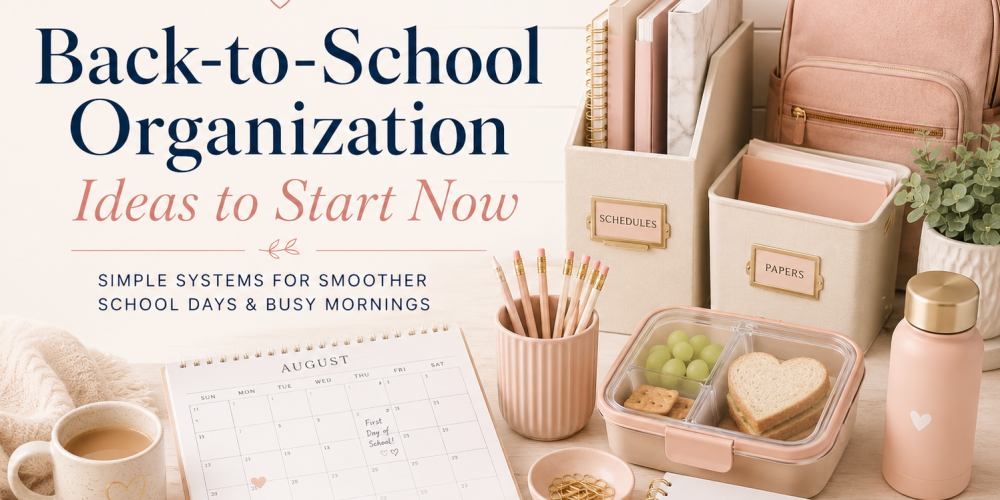
Back-to-school season has a way of sneaking up fast.
One minute it is summer break, late mornings, pool bags, snacks everywhere, and no real routine. Then suddenly you are buying school supplies, checking bus schedules, packing lunches, finding missing shoes, and trying to get everyone out the door on time.
The good news is this: back-to-school does not have to feel chaotic.
The secret is starting before the first day of school. A few simple organization systems can make your mornings smoother, your evenings calmer, and your home feel more under control before the school year even begins.
These back-to-school organization ideas will help you reset your home, routines, supplies, and schedule now so your family can step into the school year feeling prepared instead of overwhelmed.
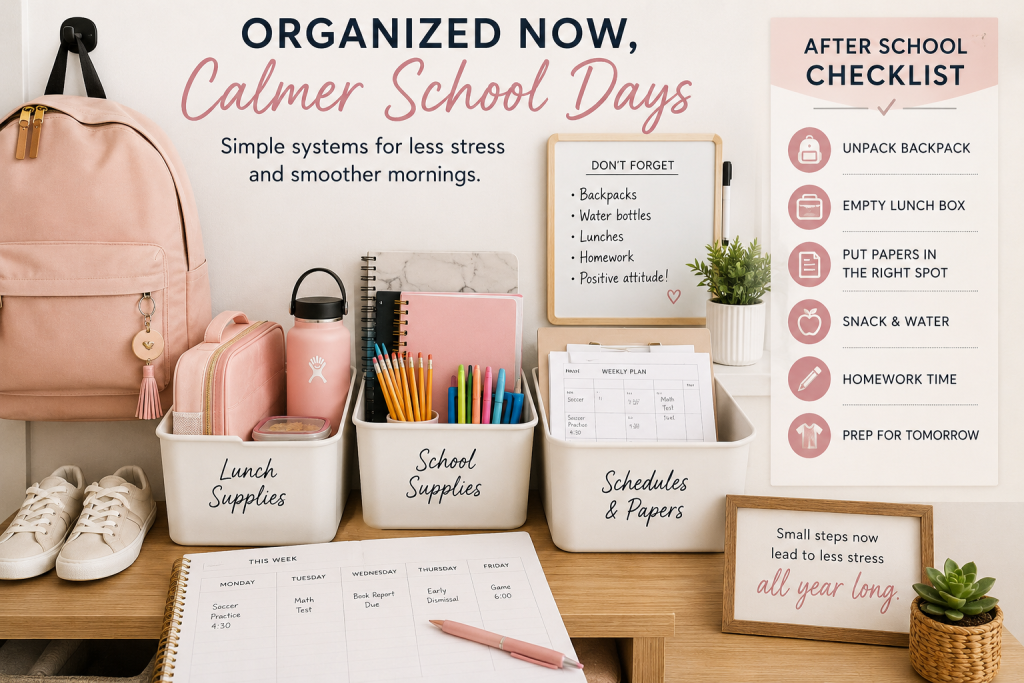
1. Create a Back-to-School Drop Zone
One of the easiest ways to reduce school-year clutter is to create a dedicated drop zone.
This is the place where backpacks, shoes, jackets, lunch boxes, sports bags, and school papers land every day. Without a system, these items usually end up on the kitchen floor, dining table, stairs, or wherever your kids drop them.
Your drop zone does not have to be fancy. It can be a small wall, a mudroom, a hallway, a closet, or even a few hooks near the garage door.
Include:
Hooks for backpacks
A basket for shoes
A bin for sports gear
A spot for lunch boxes
A small tray or folder for papers that need attention
A label for each child if you have multiple kids
The goal is simple: every school item needs a home.
2. Set Up a School Supply Station
Before school starts, gather all the school supplies you already have at home. You may be surprised by how many pencils, markers, glue sticks, folders, scissors, and notebooks are hiding in drawers and closets.
Sort supplies by category and create one easy-to-access school supply station.
You can use a rolling cart, clear bins, drawer organizers, or a cabinet.
Good categories include:
Pencils and pens
Markers and colored pencils
Glue and tape
Scissors
Index cards
Notebook paper
Folders
Extra notebooks
Chargers
Headphones
This keeps homework time easier and prevents the nightly “Where is a pencil?” scramble.
3. Make a Lunch Packing Zone
Lunches are one of the biggest daily stress points during the school year.
Make it easier by creating a lunch packing station before school starts. Choose one area in your pantry, fridge, or cabinet where lunch items are grouped together.
In the pantry, keep things like crackers, granola bars, applesauce pouches, napkins, lunch bags, and reusable containers together.
In the fridge, create a bin for yogurt, cheese sticks, fruit, cut veggies, drinks, or anything your kids can quickly grab.
You can also make a simple lunch formula:
Main item
Fruit or veggie
Crunchy snack
Protein
Treat or fun item
Drink
This helps you pack faster and makes it easier for older kids and teens to help pack their own lunches.
4. Create a Simple Morning Routine
A calm school morning actually starts the night before, but having a clear morning routine still matters.
Keep the routine short and realistic. Too many steps will overwhelm everyone.
A simple school morning routine might be:
Wake up
Get dressed
Make bed
Brush teeth and hair
Eat breakfast
Pack lunch or grab lunch box
Put on shoes
Grab backpack
Leave on time
Post the routine where your kids can see it. For younger kids, use pictures. For older kids and teens, keep it simple and direct.
The goal is to reduce repeated reminders and help everyone know what needs to happen next.
5. Build an Evening Reset Routine
The evening routine is what makes the next morning easier.
This is where so much back-to-school stress can be prevented. Instead of waiting until morning to find shoes, sign papers, pack lunches, or choose outfits, do as much as possible the night before.
A good evening reset includes:
Empty backpacks
Sign papers
Pack or prep lunches
Refill water bottles
Choose outfits
Check the next day’s calendar
Pack sports or activity bags
Charge devices
Place backpacks by the door
Even 15 minutes can completely change how your mornings feel.
6. Set Up a Family Command Center
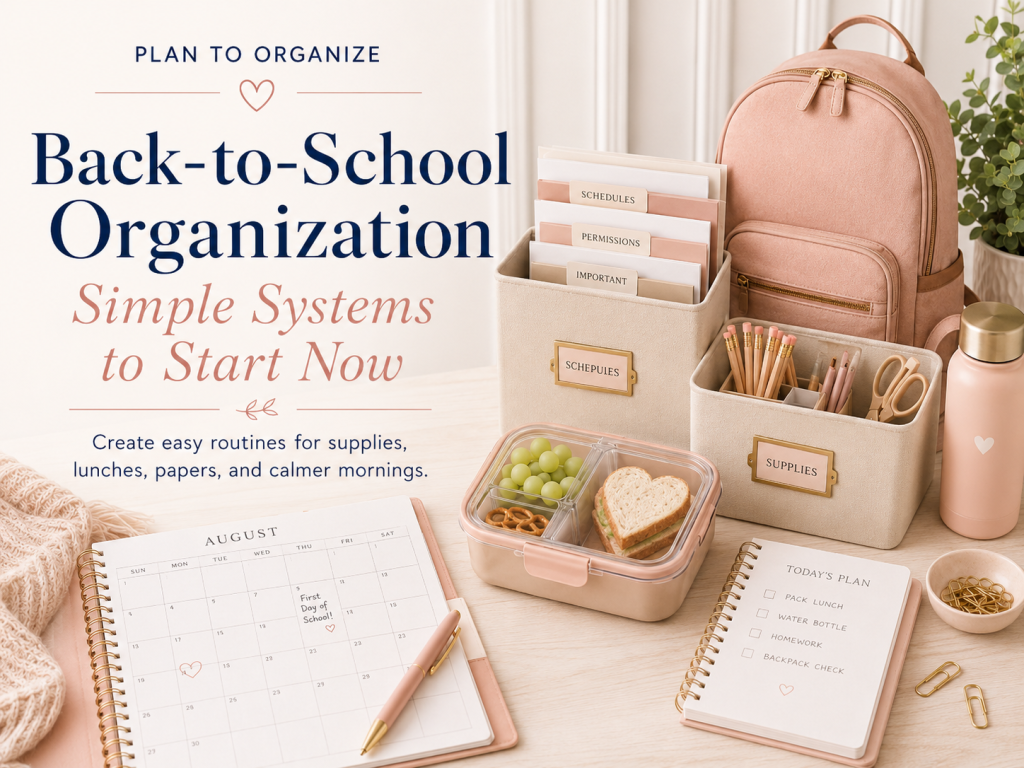
A family command center is one of the best back-to-school organization systems because it keeps the whole household on the same page.
This can be as simple as a wall calendar and a few folders. It does not need to look Pinterest-perfect to work.
Your command center can include:
A monthly calendar
A weekly schedule
A meal plan
School papers
Permission slips
Sports schedules
Chore charts
Important reminders
Family notes
Place it somewhere everyone passes daily, like the kitchen, mudroom, hallway, or entryway.
The best command center is the one your family will actually use.
7. Organize School Papers Before They Take Over
School papers can pile up quickly. If you do not create a system early, they can end up covering your counters all year.
Create three simple paper categories:
Action papers: forms to sign, payments, permission slips
Reference papers: schedules, logins, classroom info
Keepsake papers: special artwork, certificates, meaningful assignments
Keep action papers somewhere visible so they are handled quickly. Store reference papers in a folder or binder. For keepsakes, choose one bin or file box per child.
Do not keep everything. Keep the best and let the rest go.
8. Reset Kids’ Closets and Drawers
Before school starts, do a quick closet reset.
Have your kids try on clothes, shoes, jackets, and uniforms if they wear them. Remove anything that no longer fits, feels uncomfortable, or will not realistically be worn.
Then organize school clothes in a way that makes mornings easier.
You can create sections for:
School tops
School bottoms
Athletic clothes
Socks and underwear
Shoes
Jackets
Spirit wear
Dressier outfits
For younger kids, you can even plan outfits for the week in advance. For teens, make sure their most-worn basics are easy to find and clean.
9. Create a Homework Zone
Homework does not require a perfect desk setup. What matters is having a consistent place with the supplies your child needs.
A homework zone can be:
A desk
The kitchen table
A small corner
A rolling cart
A basket with supplies
A drawer near the table
Keep it simple and clutter-free. Stock it with pencils, pens, highlighters, paper, calculator, headphones, chargers, and any supplies your child uses regularly.
The fewer distractions, the better.
10. Start Adjusting Sleep Routines Early
One of the hardest parts of back-to-school is getting everyone back on a normal sleep schedule.
Do not wait until the night before school starts.
Start moving bedtime and wake-up time earlier in small increments. Even 15 minutes at a time can help make the transition smoother.
A good nighttime routine might include:
Screens off earlier
Bath or shower
Clothes picked out
Backpack ready
Reading or quiet time
Lights out at a consistent time
This helps kids and teens adjust before the school year begins.
11. Make a Weekly School Prep Checklist
A weekly checklist keeps the school week from feeling like a surprise.
Choose one day each week to reset for the upcoming week. Sunday works well for many families.
Your weekly school prep checklist could include:
Review calendar
Plan dinners
Order groceries
Wash school clothes
Prep snacks
Restock lunch supplies
Clean out backpacks
Check school emails
Charge devices
Plan outfits
Review upcoming tests, practices, games, or appointments
This does not need to take hours. A focused 30-minute reset can make the entire week run more smoothly.
12. Give Each Child a Responsibility
Back-to-school organization should not fall entirely on one person.
Even young kids can help with simple tasks, and teens should be responsible for many of their own school routines.
Examples by age:
Younger kids can put shoes away, hang backpacks, choose snacks, and place lunch boxes on the counter.
Older kids can pack backpacks, refill water bottles, organize homework, and help prep lunches.
Teens can manage their own alarms, laundry, sports bags, calendars, and school deadlines.
The goal is not perfection. The goal is building responsibility and making the household function better.
13. Prep for the First Week of School
The first week of school is always an adjustment, so make it as easy as possible.
Before school starts, prepare:
First-day outfits
Backpacks
Lunch boxes
Water bottles
School supplies
Drop-off and pick-up plans
Breakfast options
Easy dinners
After-school snacks
Emergency contact forms
Teacher emails and school portals
Try to keep dinners simple that first week. Think pasta, tacos, rotisserie chicken, sheet pan meals, sandwiches, or anything your family already likes.
Do not make the first week harder than it needs to be.
14. Create a Calm After-School Routine
After school can be just as chaotic as mornings.
Kids come home tired, hungry, overstimulated, and full of papers, lunch boxes, and stories. A simple after-school routine helps everyone reset.
Try this:
Put backpack in drop zone
Empty lunch box
Place papers in the paper station
Eat snack
Rest or decompress
Start homework
Prep for activities
This gives your kids a predictable rhythm and keeps school clutter from spreading through the house.
15. Start Small and Build From There
You do not need to organize your entire home before school starts.
Start with the systems that will make the biggest difference:
Backpacks
Lunches
Clothes
School papers
Morning routine
Evening routine
Calendar
Once those are in place, everything else becomes easier.
Final Thoughts
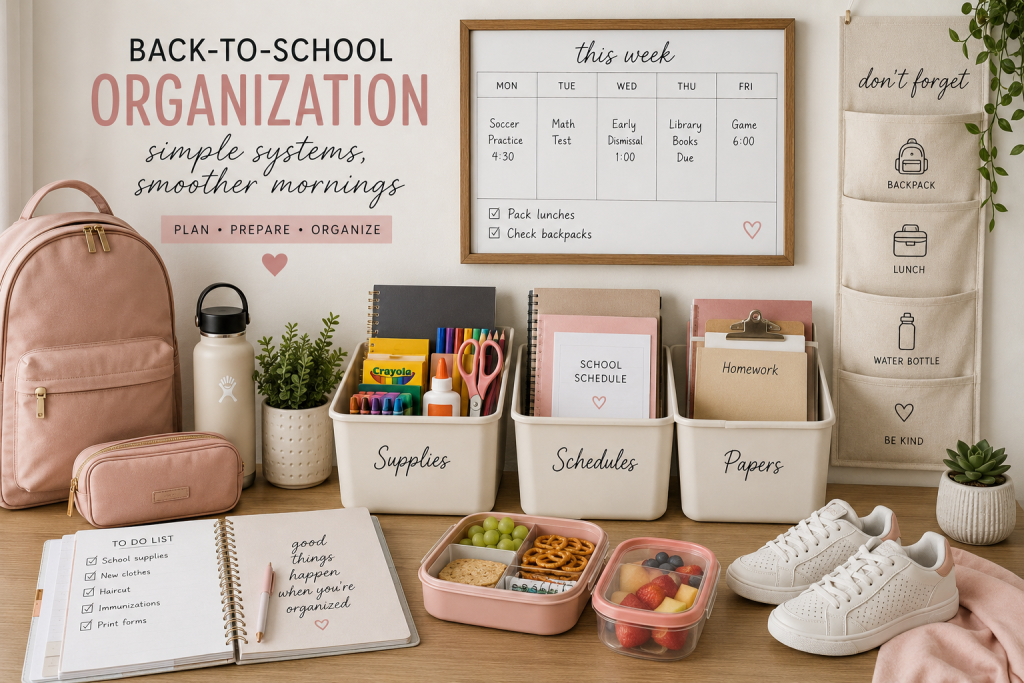
Back-to-school organization is not about creating a perfect home. It is about creating simple systems that help your family feel calmer, more prepared, and less rushed.
Start now. Set up the drop zone. Organize the school supplies. Create a lunch station. Reset the calendar. Build the routines before the first day arrives.
A little preparation now can save you from so much stress later.
The best school year starts before the first bell rings.
This post may contain affiliate links, which means we’ll receive a commission if you purchase through our link, at no extra cost to you.



Leave a Reply