In today’s fast-paced world, our homes often become storage spaces for accumulated possessions. The result? Visual chaos, mental stress, and constant overwhelm.
That’s where minimalist organization comes in.
Unlike traditional organizing methods that simply rearrange clutter, minimalist organization focuses on intentionally curating your belongings so that only what truly adds value remains. The goal isn’t perfection — it’s creating calm, functional spaces that support your lifestyle.
In this comprehensive guide, you’ll discover proven minimalist organization tips to simplify your space, reduce stress, and maintain clutter-free living long term.

Why Minimalist Organization Works
Minimalist organization works because it removes excess and distractions, allowing you to focus on what matters most.
Research shows that clutter:
- Increases stress levels
- Reduces productivity
- Impacts sleep quality
- Causes decision fatigue
By simplifying your home, you create mental clarity and emotional calm. A minimalist space supports focus, creativity, and peace.
8 Minimalist Organization Tips to Simplify Your Space
1. Declutter with Purpose
The foundation of minimalist home organization is intentional decluttering.
Instead of tackling everything at once, start small:
- One drawer
- One shelf
- One category
Set a timer for 20 minutes and focus only on that area.
Ask yourself:
- Do I use this regularly?
- Does this add value or joy?
- Would I pack this if I moved tomorrow?
- Does this reflect who I am now?
Use the keep, donate, discard method to make clear decisions.
2. Adopt the “Less Is More” Mindset
Minimalism isn’t about owning nothing — it’s about owning enough.
Shift your focus to:
- Quality over quantity
- Multipurpose items
- Durable, functional pieces
This mindset reduces decision fatigue and simplifies organizing.
Example:
Choose statement decor instead of cluttering surfaces.
Replace multiple kitchen gadgets with one high-quality multi-use tool.
Build a capsule wardrobe of versatile pieces.

3. Use Simple Storage Solutions
Storage should support your space — not overwhelm it.
Minimalist storage principles:
- Clear bins for visibility
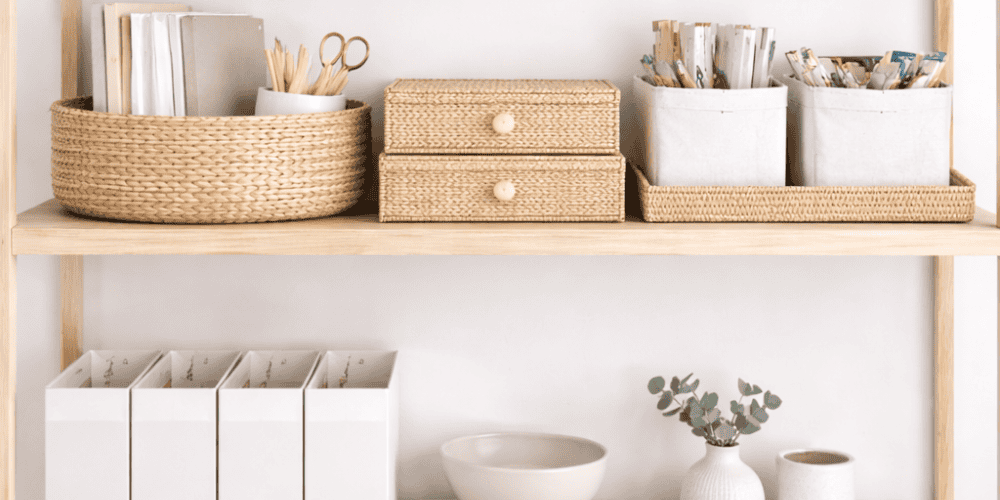
- Uniform baskets for cohesion
- Neutral tones for calm
- Drawer dividers to prevent chaos
Important: Declutter first, then buy storage.
Storage is not a solution for excess — it’s a support system for essentials.
4. Create Designated Zones
Assign every item a home.
Designated zones prevent clutter from spreading and eliminate time wasted searching for things.
Examples:
- Entryway drop zone for keys and bags
- Coffee station in the kitchen
- Charging station outside the bedroom
- Paperwork zone in your office
The “one-touch rule” helps maintain order:
Put items away immediately after use.
5. Follow the One-In, One-Out Rule
For every new item brought into your home, remove one.
This prevents clutter accumulation and forces intentional purchases.
Best categories for this rule:
- Clothing
- Books
- Kitchen tools
- Toys
- Decorative items
This single habit protects your clutter-free living system.
6. Practice Digital Decluttering
Minimalist organization includes your digital life.
Digital clutter causes mental overload just like physical clutter.
Simplify by:
- Unsubscribing from emails
- Deleting unused apps
- Organizing computer files
- Limiting social media
Schedule monthly digital clean-ups to maintain clarity.
7. Build Daily and Weekly Organization Habits
Minimalist organization is ongoing.
Daily Reset (10 Minutes)
- Make your bed
- Clear kitchen counters
- Process mail
- Return items to zones
Weekly Reset (30–60 Minutes)
- Declutter one small space
- Review paperwork
- Digital clean-up
- Donate outgoing items
Consistency prevents clutter from returning.
8. Develop Mindful Purchasing Habits
Preventing clutter is easier than removing it.
Before purchasing, ask:
- Do I need this?
- Do I already own something similar?
- Where will it live?
- Will I use this regularly?
Implement waiting periods:
- 24 hours for small purchases
- 30 days for large purchases
Minimalist living thrives on intentional buying.

Benefits of Minimalist Organization
People who simplify their homes often experience:
- Reduced stress and anxiety
- Improved productivity
- Better sleep
- Financial savings
- More time for meaningful experiences
Studies show organized environments significantly increase focus and decrease cognitive overload.
Minimalist organization creates a ripple effect — clarity in your home often leads to clarity in your life.
How to Maintain a Clutter-Free Home Long Term
Minimalist organization isn’t a one-time project.
Maintain your space by:
- Scheduling monthly check-ins
- Donating regularly
- Reviewing seasonal items
- Evaluating spending habits
The goal is progress, not perfection.
Final Thoughts: Start Small and Stay Consistent
Minimalist organization is about thoughtful choices — not rigid rules.
Your version of simplicity will look different from someone else’s. That’s okay.
Start with one drawer.
Then one shelf.
Then one room.
Each small step builds momentum toward a calmer, more intentional home.
By applying these minimalist organization tips consistently, you’ll create a space that feels lighter, more functional, and aligned with the life you truly want.
For a deeper dive into organization, read our cornerstone article How to Organize Your Life in 25 Simple Ways, where we share step-by-step systems that actually work.



Leave a Reply