
Your desk is more than just a surface—it’s the command center for your productivity, focus, and daily workflow. As a professional organizer, I’ve seen how a cluttered desk can quietly drain energy, increase stress, and slow down even the most motivated person. On the flip side, a clean and organized desk creates clarity, efficiency, and momentum.
If you constantly shuffle papers, search for supplies, or feel overwhelmed the moment you sit down to work, your desk may be working against you. The good news? With the right systems and habits, any desk—home office, corporate workspace, or student desk—can become an organized, high-functioning space.
In this guide, you’ll learn how to organize your desk step by step, using proven professional organizing strategies that are easy to maintain and designed for real life.

Why Desk Organization Matters More Than You Think
A cluttered desk isn’t just a visual issue—it impacts your brain.
Research shows that physical clutter competes for attention, making it harder to focus and process information. When your desk is disorganized, your brain is constantly working overtime to filter distractions.
An organized desk helps you:
- Improve focus and concentration
- Reduce stress and decision fatigue
- Work more efficiently
- Save time looking for items
- Feel more motivated and in control
Desk organization isn’t about minimalism—it’s about intentional design that supports how you work.
The Professional Organizer’s 5-Step Desk Organization Process
Before diving into specific hacks, let’s start with the framework I use with clients. This process ensures your desk stays organized long-term—not just for a few days.
Step 1: Clear the Desk Completely
Remove everything from your desk surface and drawers. This gives you a clean slate and helps you evaluate what truly belongs in your workspace.
Step 2: Declutter with Purpose
Ask yourself:
- Do I use this daily or weekly?
- Does this item support my work?
- Is this better stored elsewhere?
Only keep what actively contributes to your productivity.
Step 3: Categorize Items
Group similar items together—writing tools, tech accessories, paperwork, reference materials.
Step 4: Assign Homes
Every item should have a designated place. If it doesn’t, clutter will return.
Step 5: Maintain with Simple Habits
Organization succeeds when maintenance is easy and realistic.
12 Professional Desk Organization Hacks That Actually Work
1. Declutter Your Desk Weekly
Clutter builds fast. Schedule a weekly desk reset to remove unnecessary papers, supplies, and distractions. Keeping only what you truly need creates mental clarity and keeps your workflow smooth.
2. Limit Desk Surface Items
Your desktop should only hold essentials:
- Computer or laptop
- One notepad
- Writing utensils you use daily
Everything else should live in drawers, cabinets, or shelves. A clear surface equals a clear mind.
3. Use Drawer Organizers Strategically
Drawer organizers prevent chaos and save time. Use dividers to separate pens, highlighters, sticky notes, chargers, and office tools. When everything has a place, it’s easier to put items back.
4. Create a Paper Management System
Paper clutter is one of the biggest challenges to desk organization.
Use:
- A labeled file system for important documents
- An inbox tray for action items
- A shred bin for sensitive papers
File or discard papers daily to avoid buildup.
5. Designate a Desk Inbox
A single tray or folder for incoming papers prevents piles from forming. Review it daily or weekly so nothing gets lost or forgotten.
6. Manage Cables and Tech Accessories
Tangled cords create instant visual clutter.
Use:
- Cable clips or sleeves
- Cord labels
- A cable management box
Keeping cords organized improves both aesthetics and functionality.
7. Use Vertical Space to Free Up Your Desk
Shelves, pegboards, or wall-mounted organizers keep items off your desk while remaining accessible. Vertical storage is especially helpful in small spaces.
8. Store Items by Frequency of Use
Daily-use items should be within arm’s reach. Rarely used supplies should be stored elsewhere. This keeps your desk functional and uncluttered.
9. Go Digital Whenever Possible
Reduce paper clutter by:
- Scanning documents
- Using digital note-taking apps
- Storing files in cloud-based folders
Digital organization complements physical organization beautifully.
10. Keep Desk Decor Minimal and Intentional
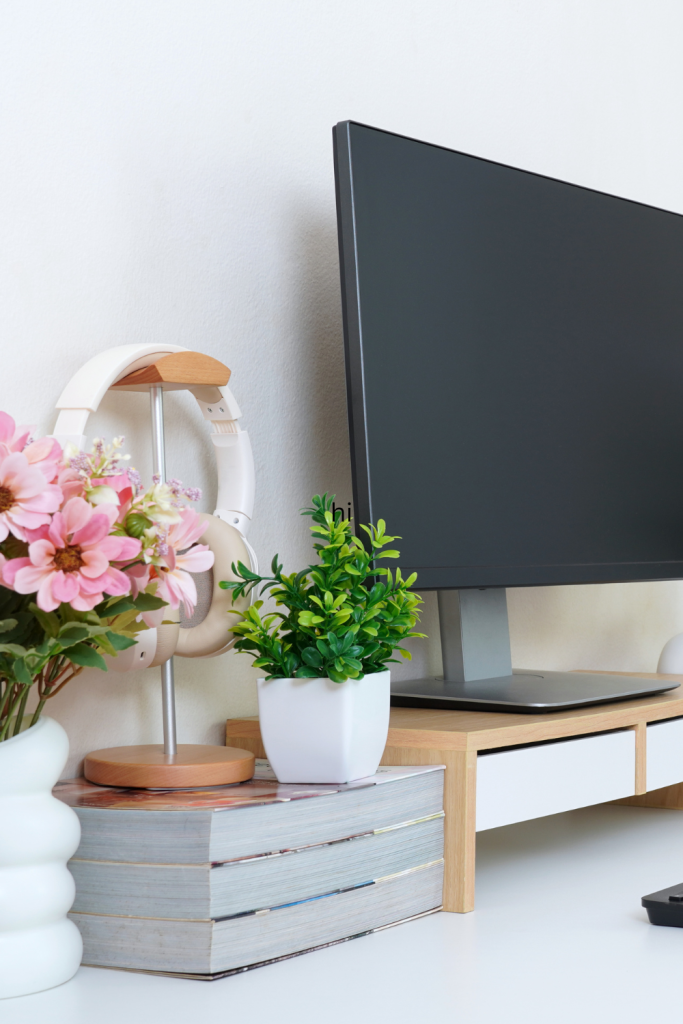
Personal touches matter—but too many become distractions. Choose one or two meaningful items, like a plant or photo, to add warmth without clutter.
11. Establish a Daily Desk Reset
Spend 3–5 minutes at the end of each workday:
- Clearing papers
- Putting items back in their place
- Wiping down the surface
This small habit prevents clutter from taking over.
12. Create Systems That Match How You Work
There is no one-size-fits-all desk setup. Your organization should reflect your workflow, schedule, and habits. If a system feels hard to maintain, adjust it.
Common Desk Organization Mistakes to Avoid
- Keeping “just in case” items on your desk
- Overloading drawers
- Ignoring digital clutter
- Buying organizers before decluttering
- Creating systems that are too complicated
Simple systems always win.
How to Maintain an Organized Desk Long-Term
- Weekly mini-declutter
- Monthly reassessment
- Seasonal purge of supplies
- Consistent daily reset
Organization is not a one-time project—it’s a habit built over time.
Conclusion: Your Desk Should Support Your Success
A clean, organized desk does more than look good—it supports focus, productivity, and peace of mind. By applying professional organizing principles and building simple habits, you can transform your desk into a workspace that truly works for you.
Start small. Choose two or three strategies from this guide and implement them today. Over time, those small changes will lead to big improvements in how you work and feel.
Your desk should help you succeed—not slow you down.
For a deeper dive into home organization, read our cornerstone article 100 Best Tips for an Organized Home, where we share step-by-step systems that actually work.





Leave a Reply